
See exactly whatyour body is made of
The only method that simultaneously and precisely measures body fat, lean muscle, and bone mineral density — separated by region, compared to your peers.
Body fat %
Lean mass
Bone density
A/G ratio
Bilateral symmetry
Resting metabolic rate
Radiation <1 μSv · Less than a 30-minute flight
Sample values from an actual DEXA scan · Individual results vary
Three tissues. One scan.
Every gram of your body mass falls into one of three categories. DEXA is the only clinical tool that directly and simultaneously measures all three — separated by region, with left-right comparison.
Fat tissue
~30%
Stored body fat — measured at each region separately, including android/gynoid split.
Lean tissue
~66%
Muscle, organs, water — your metabolically active tissue and the driver of your RMR.
Bone mineral
~4%
Bone mineral content and density by skeletal zone, with T-score and Z-score.
Fat distribution
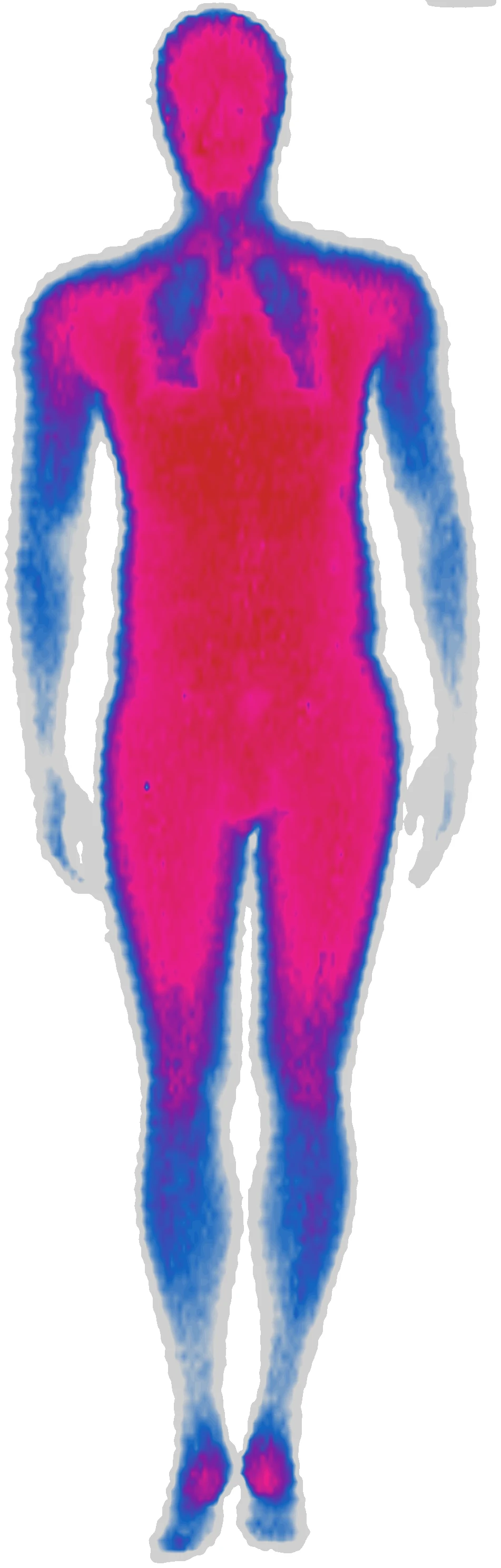
Pink/red = dense fat · Blue = lean
Bone density scan
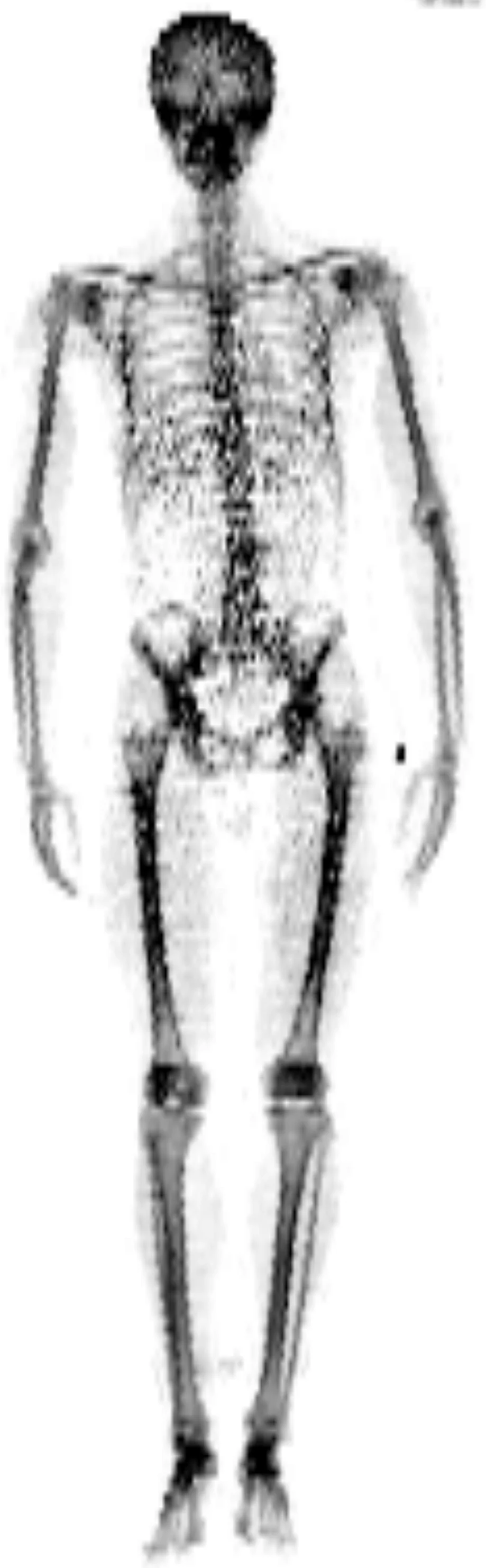
Full skeletal posterior view
Actual scans from a SDRC DEXA report · GE Lunar DPX-NT · Individual results vary
Two scan types. Different clinical goals.
Total Body DEXA and dedicated Spine + Hip DEXA are separate scans with different purposes. Knowing which one you need — or whether you need both — is important before you book.
⚖️
Scan type 1
Total Body DEXA
Primary purpose: body composition. Measures fat %, lean mass and regional breakdown across the whole body. Also includes a total body BMD overview on page 4 of the report — but this is not the clinical gold standard for osteoporosis diagnosis.
Body fat % and lean mass (total and by region)
Android / gynoid fat split and A/G ratio
Resting metabolic rate estimate
Total body BMD overview — page 4 (not site-specific)
Left-right symmetry comparison
Best for
Weight management, body recomposition, GLP-1 monitoring, sports performance, metabolic conditions, annual health baseline.
🦴
Scan type 2
Dedicated Spine + Hip DEXA
Primary purpose: bone density. Targeted BMD measurement of the lumbar spine (L1–L4) and femoral neck — the two sites required for WHO osteoporosis classification. Also provides some body composition estimates, but that is not its primary use.
L1–L4 lumbar spine BMD (T-score, Z-score)
Femoral neck and total hip BMD
WHO classification: normal / osteopenia / osteoporosis
Fracture risk context
Monitoring response to treatment or supplementation
Best for
Post-menopausal women, men 50+, long-term corticosteroid use, GLP-1 users (bone monitoring), osteopenia follow-up.
💡
Many clinicians recommend both. The Total Body scan tracks composition over time; the Spine + Hip scan provides the clinically validated BMD numbers for osteoporosis assessment. If you're on a GLP-1 or managing bone health, ask about doing both scans in the same visit.
Recommended scan schedule by profile
GLP-1 / semaglutide users
Total Body: every 6 months · Spine+Hip: annually
Post-menopausal women
Spine+Hip: annually or every 2 years
Men over 50
Spine+Hip: every 2–3 years, annually if at risk
Long-term corticosteroid use
Spine+Hip: baseline then every 12 months
Athletes / body recomposition
Total Body: annually for composition trend
Osteopenia (T-score −1 to −2.5)
Spine+Hip: every 12–18 months
Schedule guidance only. Follow your clinician's specific recommendation.
DEXA vs everything else
Most methods estimate. DEXA directly measures. That difference matters when you're making health decisions.
What your DEXA report contains
Each page answers a specific question. Designed for clarity, not just data.
Reference ranges explained
Body Fat % — Men (ACE)
Athletic < 14%
Fit 14–18%
Normal 18–25%
Excess > 25%
Women's ranges are ~5–8% higher.
Bone Density T-Score (WHO)
Osteoporosis ≤ −2.5
Osteopenia
Normal ≥ −1.0
T-score compares you to healthy peak bone mass at age 30.
Lean Mass Index ALMI — Men
Low < 7.26
Normal 7.26–9.2
High > 9.2
Appendicular Lean Mass (arms + legs) in kg/m². Baumgartner 1998.
Who benefits from DEXA
DEXA is useful whenever you need to go beyond a scale — whether you're training, managing a condition, or simply want an honest baseline.
🏋️
Body recomposition
Track real fat loss vs muscle gain — not just the scale.
🦴
Osteoporosis screening
Post-menopausal women, men 50+, long-term steroid users.
💉
Metabolic conditions
Diabetes, PCOD, thyroid — where body composition guides management.
🏃
Sports performance
Athletes needing precise lean mass targets and bilateral data.
📊
Annual health baseline
A scan in your 30s gives you a personal trend line for life.
💊
Long-term medication
Corticosteroids, hormone therapy, and bone-affecting drugs.
Scan details
Duration
15–20 minutes
Radiation
<1 μSv · equivalent to ~30 min background
Preparation
No fasting · avoid calcium supplements 24 hr before
Report
5-page PDF · same day in most cases
Scanner
GE Lunar DPX-NT Densitometer · ID 152585
Location
101 Jade Arcade, Paradise, Secunderabad
Important to know
Reference population is White/Caucasian (GE Lunar). South Asian-specific norms are not available — this may underestimate bone loss risk in South Asian individuals.
Visceral fat (VAT) estimation is not available on this scanner model (GE Lunar DPX-NT).
Trend comparison is meaningful after a repeat scan on the same machine.
DEXA reports are clinical decision support and should be interpreted with a qualified clinician.
Know exactly whatyour body is made of
Book a DEXA scan online or send your prescription on WhatsApp. Reports typically ready the same day.
SDRC Diagnostics · 040 6600 4200 · 101 Jade Arcade, Paradise, Secunderabad
